 Event
Event
Dieweg Cemetery
Sun, 7 Jun 2026 · 14:00
Begraafplaats Ukkel-Dieweg, Brussels
€15
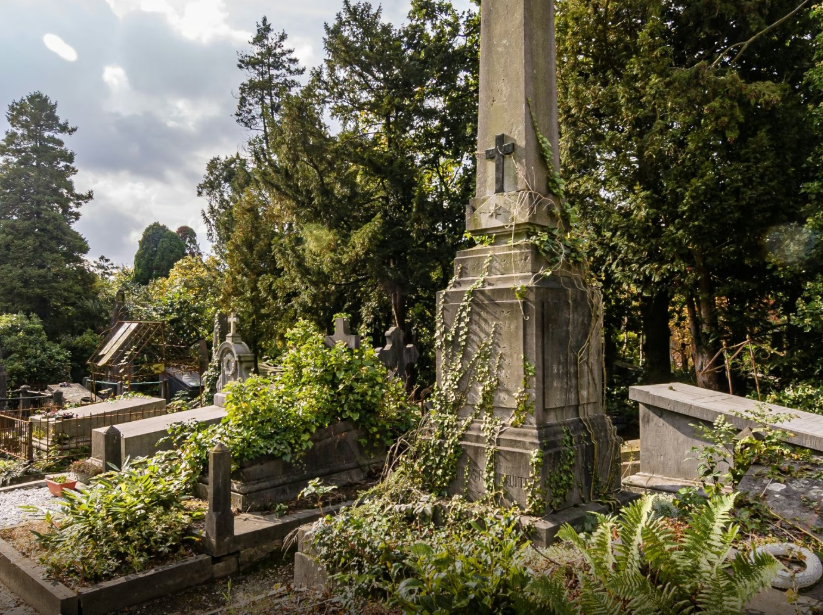
Few suspect that hidden between a railway line and quiet residential streets in Uccle lies one of the most intriguing heritage sites in Brussels. Laid out in the second half of the 19th century, the Dieweg cemetery reflects how the bourgeoisie of that time dealt with death, memory, and status. Since its closure in 1958, the site has been slowly taken over by nature, giving it an almost romantic and melancholic atmosphere. As a result, the cemetery is simultaneously heritage, landscape, and an open-air museum, where decay and beauty go hand in hand.
The cemetery of generals and artists
Dieweg is often called the cemetery of the generals, but it can just as well be seen as a literary and artistic cemetery. Numerous high-ranking officers from the 19th century found their final resting place here, which explains the civil-military character of the cemetery. At the same time, prominent figures from cultural life are buried here, including Hergé, the creator of Tintin, as well as writer Eugène Demolder and architect Paul Hankar, a pioneer of Brussels Art Nouveau.
What makes Wat Dieweg so special in terms of architecture and landscape is the wealth of funerary monuments within a park-like setting. Neoclassical tombs, neo-Gothic funerary chapels, and Art Nouveau details alternate along winding paths and at different elevations, making the cemetery read like a small city. The abundant vegetation of trees, ivy, and moss softens the monumental architecture and reinforces the atmosphere of stillness and decay. During the walk, the cemetery, which has been protected heritage since 1997, becomes visible as a rare fusion of architecture, landscape, and urban history.