 Event
Event
Kapelleveld: a utopia between Art Déco and Modernism
Sat, 6 Jun 2026 · 10:00
Devant l’église Notre-Dame de l’Assomption (métro Vandervelde), Brussels
€10–15
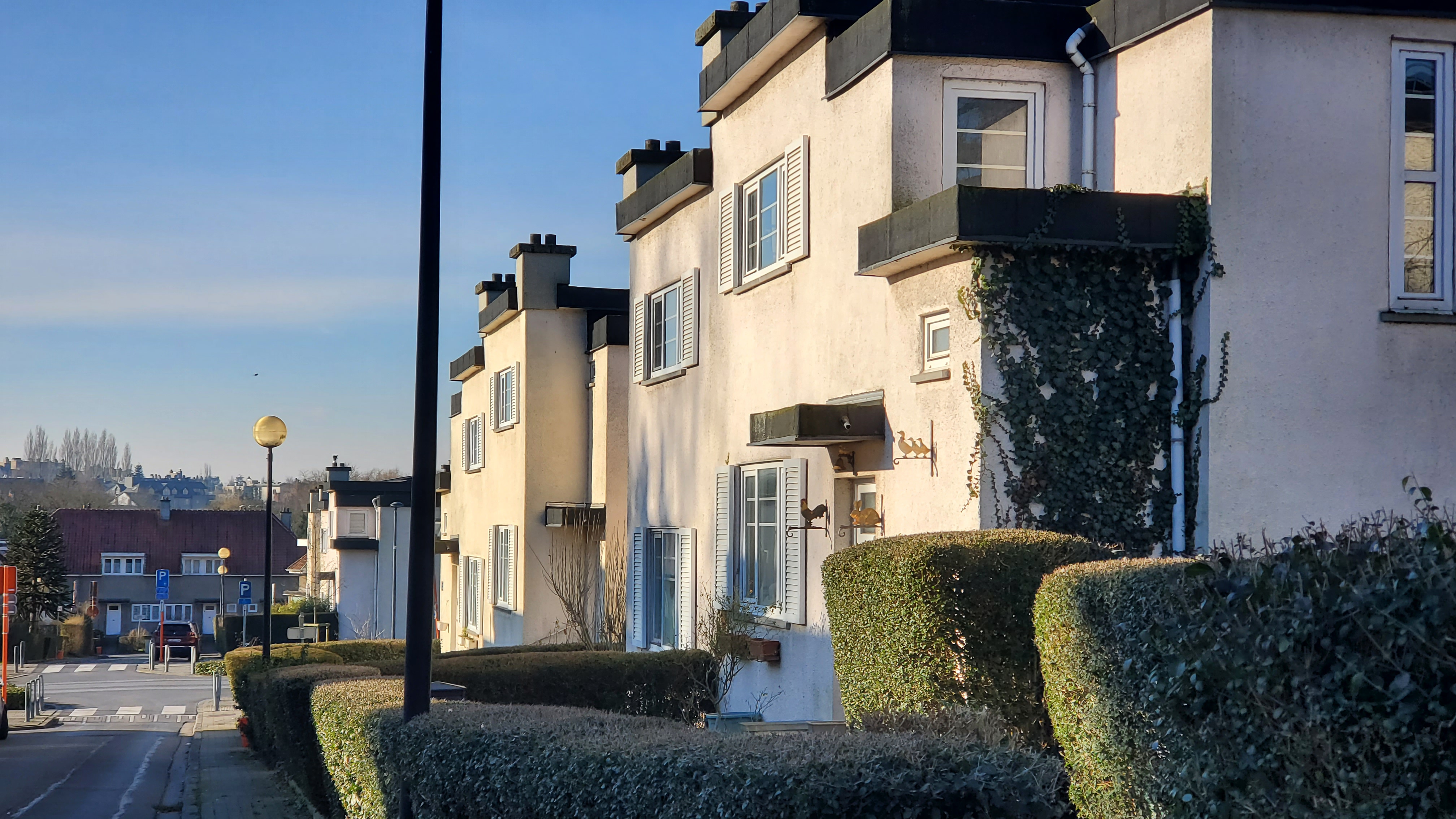
Started in 1922, the Kapelleveld garden city can boast two specificities: it is the only Brussels garden city that primarily targets intellectual workers and the only one initiated by a Catholic-inspired tenants' cooperative. Its construction was staggered in several phases, from the 20s to the 70s, but it is especially during the Interwar period that the city experienced its flourishing.
As at Logis-Floréal, it is Louis Van der Swaelmen who draws the layout plan of the neighborhood, while the realization of the houses is entrusted to four architects from the modern movement. Antoine Pompe, Huibrecht Hoste, Jean-François Hoeben, and Paul Rubbers thus design more than 400 dwellings of different typologies, from the cubic pavilion to semi-detached houses inspired by the Amsterdam School. The Kapelleveld garden city is thus the place of experimentation for new architectural canons, but also for new construction techniques, as at the La Roue city in Anderlecht.
Between these constructions, green spaces have a large share: facade and interior courtyard gardens, alleys, tree-lined arteries, playgrounds, and small squares punctuate the whole. The ARAU invites you to discover this garden city with such a particular style, but also to show you how it was completed over time by other ensembles.
Venue
Devant l’église Notre-Dame de l’Assomption (métro Vandervelde)
Avenue Emile Vandervelde, 153, 1200 Brussels