 Event
Event
Acting training in 5 weekends around Shakespeare
Sun, 7 Jun 2026
Atelier de l'acteur, Brussels
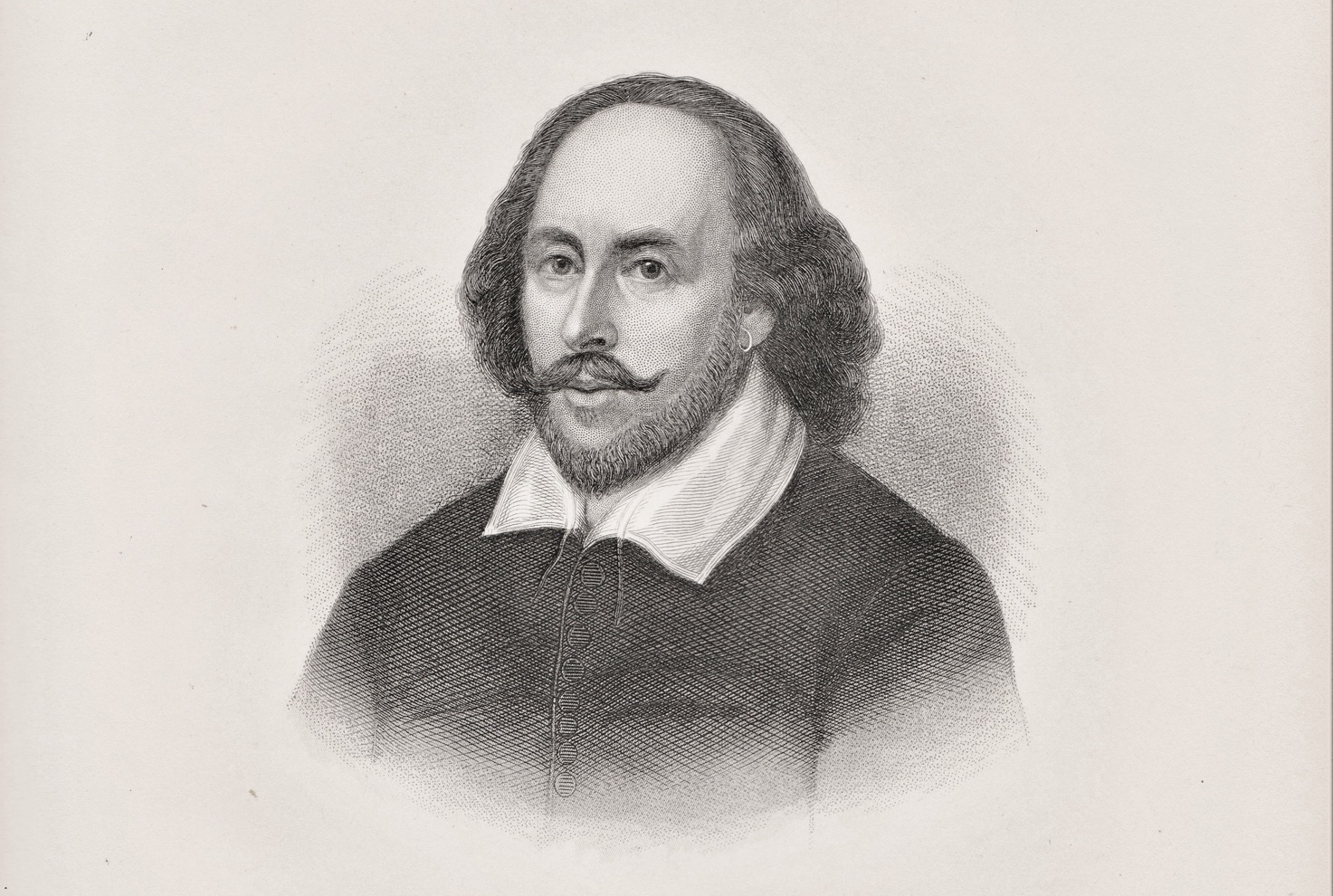
Jouer Shakespeare allows you to familiarize yourself with fundamental dramatic structures and to understand how plays work. Its fascinating characters, of unheard-of depth, make you travel through a wide range of emotions. And with its language, full of metaphors, symbols, and images, you take flight!
As background work, we do exercises that help us feel our body and its impulses and to be in contact with our inner world and our creativity. Breathing plays an important role. We work on opening our senses as well as on our relationship with space and our partners.
We train on monologues, dialogues, and scenes with several people. We establish a balance between the meaning of the text, our movements, our voice, and our emotions to transform what is written into living words and to metamorphose ourselves into someone else.
Constant and precise feedback makes you progress effectively. You learn to understand the work to become more and more autonomous. This allows you to apply it in your personal projects, whether they are artistic, pedagogical, therapeutic...
Thanks to the different experiences in a benevolent setting and accompanied in a competent manner, the range of your possibilities as an artist-actor(ress) expands. Your acting becomes more accurate and freer and your presence is strengthened.
The work can be done in French but also in other languages.
What texts do you want to work on?
The teacher:
Phil Kaiser has been a drama teacher for over 25 years. He acquired his experience as a teacher at the “Kleine Academie” (three-year professional theater training), at the scenography department of the Ecole Nationale Supérieure of the Beaux Arts “ La Cambre ”, all in Brussels, as well as at the dance academy “ Erika Klütz ” in Hamburg. Various institutions in Belgium and Germany invite him as a pedagogue.
Phil Kaiser is also an actor, director, and author. He has designed and directed numerous theatrical productions that have toured in Belgium and abroad.
He studied at the Ecole Nationale Supérieure of Arts in Hamburg and at the Kleine Academie in Brussels. In Berlin, he followed a breathing teacher training. He also holds a State diploma as a movement and dance teacher.
Since 2016 he has been running the Actor's Workshop.
Dates and times:
October 10, 11, 12..; December 19, 20, 21, 2025; February 6, 7, 8; April 17, 18, 19, 2026:
• Friday from 6:45 PM to 9:45 PM,
• Saturday from 2:00 PM to 6:30 PM (sometimes a little longer if it's possible for you),
• Sunday from 10:00 AM to 5:00 PM.
June 5, 6, 7, 2026:
• Friday from 6:45 PM to 9:45 PM,
• Saturday from 2:00 PM to 8:00 PM,
• Sunday from 10:00 AM to 6:30 PM, presentation in the afternoon.
Absence from part of a weekend is not a problem.
The training includes 4 individual sessions of about an hour and a quarter to work on a monologue. But it is also possible to share it with another participant or other participants to work on a dialogue or a scene with several people. Participants who come from far away can take this individual session on Friday or Saturday morning of a working weekend, other participants take it between the working weekends.
The participants:
Advanced amateurs, semi-professionals, and actors in the process of professionalizing
Contribution:
70.5h of collective work (including the presentation) + 4 individual sessions
At the time of registration, one can cross out a specific weekend and pay a reduced price. In this case, you are entitled to 3 individual sessions.
Two different formulas:
1. a deposit of €280 which guarantees your place, to be paid at registration + €940 (with a crossed-out weekend: €740) to be paid at the latest 2 weeks before the first weekend or
2. a deposit of €280, to be paid at registration + €343 (with a crossed-out weekend: €273) at the latest 2 weeks before the first class + €343 (with a crossed-out weekend: €273) at the latest November 15, 2025 + €343 (with a crossed-out weekend: €273) at the latest December 15, 2025.
You must register for the full school year. If there are places left, other formulas are possible. If you join the group later in the year, the amounts to be paid are calculated from formulas 1 or 2.
If you want to add a weekend later, it is possible.