Theatre
Rumba
Rumba is the final installment of the trilogy of poor devils, created by Ascanio Celestini and David Murgia.
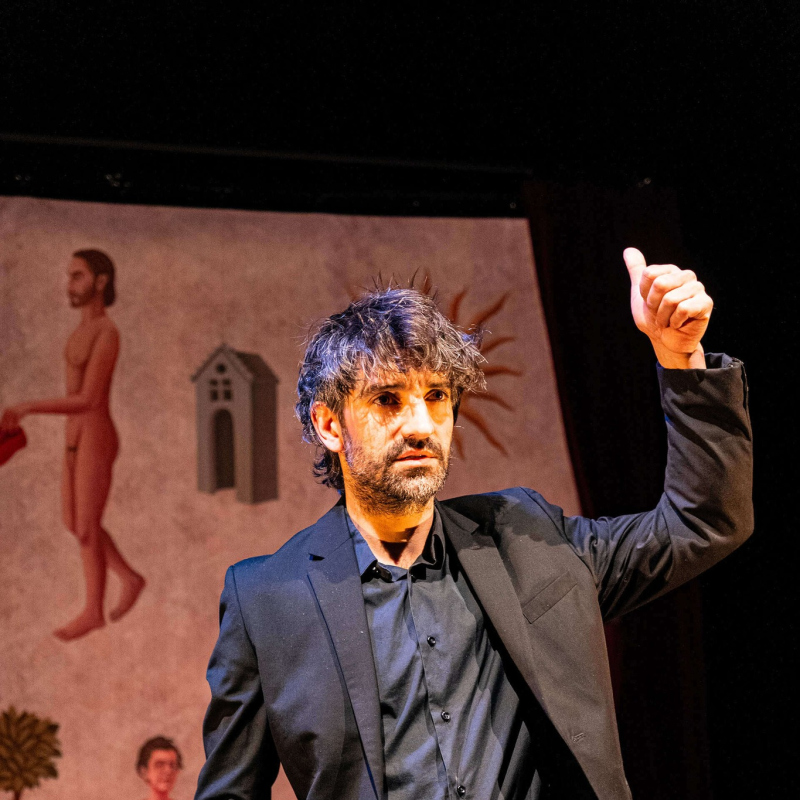
Après Laika and Pueblo, Rumba is the final tableau of this trilogy of poor devils. On the same imagined asphalt, in the same urban and human periphery zone, near a supermarket parking lot and a logistics warehouse, between the corner bar and a working-class apartment building, Celestini and Murgia recount the coming and going of humanity in the parking lot. Characters who every year perform the miracle of surviving in a world that crushes them. Dans Laika, the narrator recounts what he saw. Dans Pueblo, he recounts what he imagines. Dans Rumba, the narrator goes down to the parking lot, with Pierre and his accordion. It's Christmas night, they are preparing a small show.
Francesco is named Giovanni. He is the son of a rich merchant who goes to France to sell fine fabrics. He learns French, sings in French, reads courtly literature novels, so he is called "Francesco". He becomes a knight or would like to become one, goes to war, but ends up in prison. Upon his release from prison, he has to rebuild the houses of the nobles that the people chased out of Assisi and learns the trade of a mason. He thus becomes the saint who learns to rebuild God's Church on earth. But why does Francis still fascinate us after eight centuries? And what if Francis had been born in 1982 and not in 1182, where would we find him today? Among the tramps panhandling in a supermarket parking lot? Among African warehouse workers moving boxes in a large logistics warehouse? And in this parking lot, what nativity scene would he make in the middle of the garbage?
How many stars are there in the sky? There are so many that we cannot count them.
Full price: €20 | Presale: €17
Venue
Espace culturel de Trois-Ponts
Rue Traverse 9, 4980 Trois-Ponts
8 upcoming events here on shou · Theatre, Family